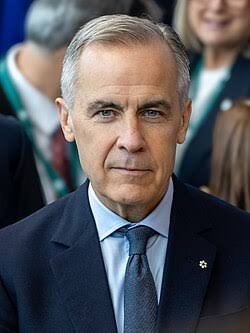
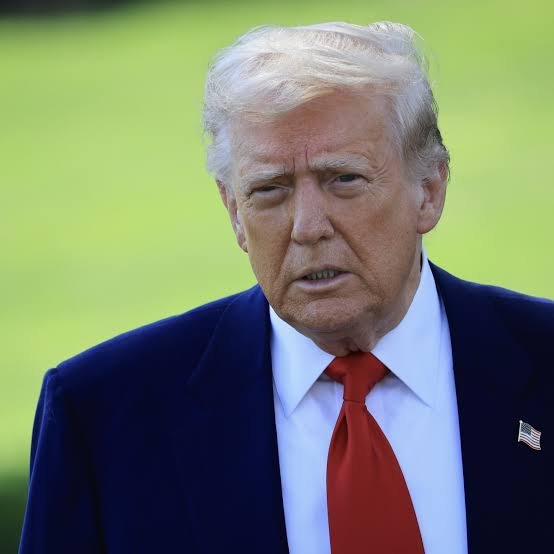
Canadian Prime Minister Mark Carney, left, and President Donald Trump
Direct & Action-Focused: Following a total breakdown in last-ditch diplomatic talks, the United States enacted 50% tariffs covering $20 billion in Canadian imports early Saturday. In response to the unprecedented escalation between the long-standing partners, Canadian officials confirmed they will execute matching retaliatory tariffs effective September 8.
Slapshot to the Economy: Broad US Import Duties Hit Key Canadian Goods from Ice Rinks to Hospitals
Everyday Exports Under Fire: Trump’s 5% Duty Sweep Spans Everything From Hockey Gear to Medical Tools
Targeting Northern Goods: New US Tariffs Sweep Up $1 in Every $20 of Canadian Exports
Prime Minister Mark Carney stated that full specifics for the new counter-measures will be disclosed shortly, with enforcement scheduled for the Tuesday following Labor Day. Speaking from Ottawa, he confirmed the equal, dollar-for-dollar response will sweep across several key sectors, including steel, dairy, household appliances, agricultural machinery, paper pulp, and consumer electronics.
“They Asked Too Much”: Carney Scuttles US Trade Deal, Sets Post-Labor Day Tariff Counterstrike
Line in the Sand: Canada Rejects “Unreasonable” US Demands, Readying Reciprocal Tariffs
Dollar-for-Dollar Hit: Ottawa Targeted Key US Sectors After Cross-Border Negotiations Collapse
Top U.S. trade negotiator Jamieson Greer stated on Fox & Friends Weekend
that the administration was willing to reduce import duties on high-stakes Canadian sectors—specifically steel, automobiles, and timber. Insisting that Ottawa has historically held highly advantageous trading terms and was inline for even stronger concessions, Greer argued that Canadian officials ultimately chose to walk away from the deal.
He further noted that the U.S. is proceeding with concrete steps to counter Ottawa’s planned retaliation.
The escalating trade disputes also cast serious doubt on the stability of the trilateral North American pact uniting the U.S., Canada, and Mexico—a framework essential to commercial operations across all three economies.
Carney noted that American officials introduced last-minute conditions that would have limited tariff concessions on Canadian-assembled vehicles, curbed Ottawa’s authority to negotiate independent foreign trade agreements, and eroded existing safeguards for national sovereignty, language, and cultural identity. The prime minister dismissed these final demands as completely “unacceptable”.
“No Talks Planned”: US and Canada Trade Escalation Deepens as Both Sides Prepare Next Moves
Full Spectrum Response: Carney Vows Sector Safeguards While Premier Ford Demands “Dollar-for-Dollar” Retaliation
Collapse of Compromise: High-Stakes Border Talks Fall Apart into Mutual Counter-Tariff Threats
An extraordinarily collaborative partnership turns bitter
Early Saturday, the U.S. imposed 50% tariffs on $20 billion of Canadian imports after negotiations collapsed. The levies affect about 5% of Canada’s annual exports, covering goods from hockey sticks to medical supplies. In response, Prime Minister Mark Carney confirmed Canada will launch matching counter-tariffs on September 8.
Ottawa’s retaliatory measures will target American steel, dairy, appliances, farm equipment, paper pulp, and electronics. Carney revealed Canada offered to drop existing tariffs on U.S. metals and autos if Washington offered meaningful relief. However, he rejected the final U.S. proposal, stating American negotiators “asked too much and offered too little.”
U.S. Trade Representative Jamieson Greer defended the administration, claiming Washington offered duty cuts on sensitive items like lumber, steel, and autos. Greer asserted that Ottawa turned down a strong deal, prompting the U.S. to advance protective measures for domestic supply chains. The standoff now threatens the trilateral trade agreement binding the U.S., Canada, and Mexico.
Carney noted the breakdown occurred after U.S. officials introduced late demands limiting Canadian auto tariff relief and restricting independent trade deals. He deemed these terms unacceptable while announcing targeted safeguards for impacted domestic industries. Ontario Premier Doug Ford backed Ottawa completely, calling for a “dollar-for-dollar” retaliatory strike.
The sudden rupture marks a dramatic shift for two allies that conducted $880 billion in two-way trade last year. While the nations historically managed disputes over softwood lumber and dairy, alliance ties remained intact. President Donald Trump’s push to repatriate manufacturing and aggressive rhetoric have pushed the relationship into uncharted territory.
The political fallout threatens to outlast the immediate economic damage, with no further diplomatic talks currently scheduled. A brief three-day tariff delay expired without a compromise between the cross-border partners. Reflecting on the split, Carney acknowledged that “America has changed” and signaled relations will not return to their old dynamic.
Public frustration is mounting rapidly on both sides of the border.
Frustration across the border has boiled over, with an online petition demanding the removal of U.S. Ambassador Pete Hoekstra gathering nearly 248,000 signatures since late July. The petition accuses the former Michigan congressman of giving legitimacy to rhetoric surrounding Canadian annexation.
The economic pressure remains immense, as nearly 72% of Canada’s exports head south to the U.S. market. At the same time, the White House faces domestic risks because importers absorb these duties, passing costs directly to American consumers already struggling with high inflation ahead of the upcoming midterm elections.
Former trade official Ryan Majerus observed that negotiations stalled over unmatched expectations regarding sector-specific relief and concessions. He noted that finding a diplomatic resolution becomes significantly harder once Canada institutes its own reciprocal tariffs.
Candace Laing, CEO of the Canadian Chamber of Commerce, described the import duties as a severe blow to North American economic competitiveness. She cautioned that the escalation will raise everyday costs for Americans while damaging Canadian businesses, investment, and consumer stability.
Trump revives 1930s-style import penalties to shield American industries.
President Donald Trump has positioned tariffs as the core engine of his second-term economic agenda. Seeking legal authority beyond limits set by the Supreme Court, the White House invoked Section 338 of the Tariff Act of 1930—a Great Depression-era mechanism—to levy 50% tariffs on $20 billion of Canadian imports.
Section 338
permits the executive branch to slap punitive import taxes on nations deemed to discriminate against U.S. commerce. The legislation requires no prior investigation and sets no expiration dates, reviving trade barriers not seen since the notorious Smoot-Hawley era that crippled global trade nearly a century ago.
This drastic escalation comes as North America faces a mandatory review of the United States–Mexico–Canada Agreement (USMCA
). While the U.S. has initiated preliminary discussions with Mexico, negotiations with Ottawa have hit a wall, casting serious doubt on whether the trilateral pact can survive intact.
Legal experts note that both capitals backed themselves into a corner by committing publicly to retaliatory paths. Legal scholar Barry Appleton pointed out that Canada made clear it would halt dialogue if duties landed, while U.S. officials refused to tolerate counter-measures—turning a political standoff into an inevitable cycle of escalation.